


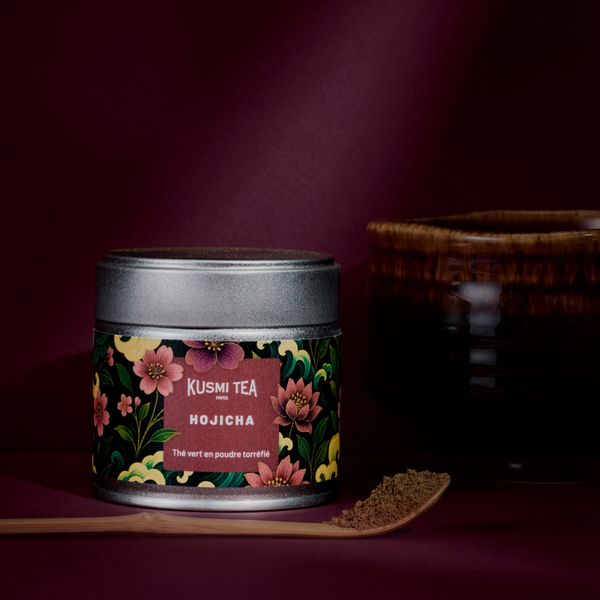
Hojicha
Hojicha Green Tea Powder • 30g • Japan • Organic
Filters
Tea has accompanied humanity for more than 5,000 years, since its first harvests in China. All these varieties, however, come from one and the same plant, Camellia sinensis. What changes from one tea to another is the terroir: the climate, the altitude, the soil, and of course the manufacturing know-how.
The great origins of tea around the world
Impossible to talk about tea without starting with teas from China, its historic cradle. You can find everything there: delicate green teas, more robust black teas, and the famous oolong and pu-erh. Three provinces particularly stand out for their tradition and expertise: Zhejiang, Fujian and Yunnan.
India has established itself as one of the world's production giants. The Darjeeling, cultivated in the Himalayan foothills, is its best-known ambassador. But the country also produces Assam teas, appreciated for their potency and their distinct malty notes.
Japan is following another path, that of exceptional green tea. Sencha, Matcha, Gyokuro: these names evoke a vegetal freshness, a touch of iodine and an aromatic finesse that few other origins can reproduce.
Other countries complete this tea panorama: Sri Lanka and its Ceylon teas, Kenya, Taiwan, Nepal, and even South Korea, all of which benefit from being better known.
The emblematic natural teas of Kusmi Tea
At Kusmi Tea, we make it a point of honor to also discover the most beautiful terroirs in the world through original teas, without added aromas. Here, no artifice: only the tea leaf is expressed, in all its authenticity.
Darjeeling : the champagne of black teas
Harvested on the heights of the Indian Himalayas, the Darjeeling lives up to its nickname. We find a real elegance, floral notes and a hint of muscat which give it all its character. A refined tea, to be enjoyed both in the morning and at the end of the afternoon.
Gunpowder: the essential Chinese green tea
The Gunpowder owes its name to its leaves rolled into small pearls, reminiscent of gunpowder. Once infused, it gives a fresh, slightly vegetal liqueur, with a discreet mineral touch. It is also the traditional base of mint tea, appreciated for its liveliness and its clean taste.
Sencha: the benchmark for Japanese green tea
In Japan, the Sencha is a classic. Vegetal freshness, herbaceous notes, slight sweetness on the finish: it is a balanced tea, perfect for those who are discovering or deepening their passion for Japanese green teas.
Assam: an intense and generous black tea
Originating from the north-east of India, this black tea does not take half measures: full-bodied, with malty and woody notes, it gives all its power to breakfast.
The daily benefits of tea
Tea is not just about taste pleasure. It is naturally rich in antioxidants, particularly polyphenols, which help protect cells from oxidative stress.
Its theine content also gives it a role to play for concentration and alertness, with a more progressive energy than that of coffee. Green teas are distinguished by their richness in catechins, while black teas focus more on roundness and aromatic depth.